As negotiations between Washington and Tehran continue over a possible long-term ceasefire arrangement, Iran on Monday publicly denied reports that it had agreed to transfer its enriched uranium stockpile abroad, directly contradicting claims made by US President Donald Trump.
The sharp divergence in messaging has once again exposed the fragile and uncertain nature of the ongoing talks between the two countries, which are attempting to convert last month’s ceasefire into a broader political understanding after weeks of conflict across the region.
Advertisement
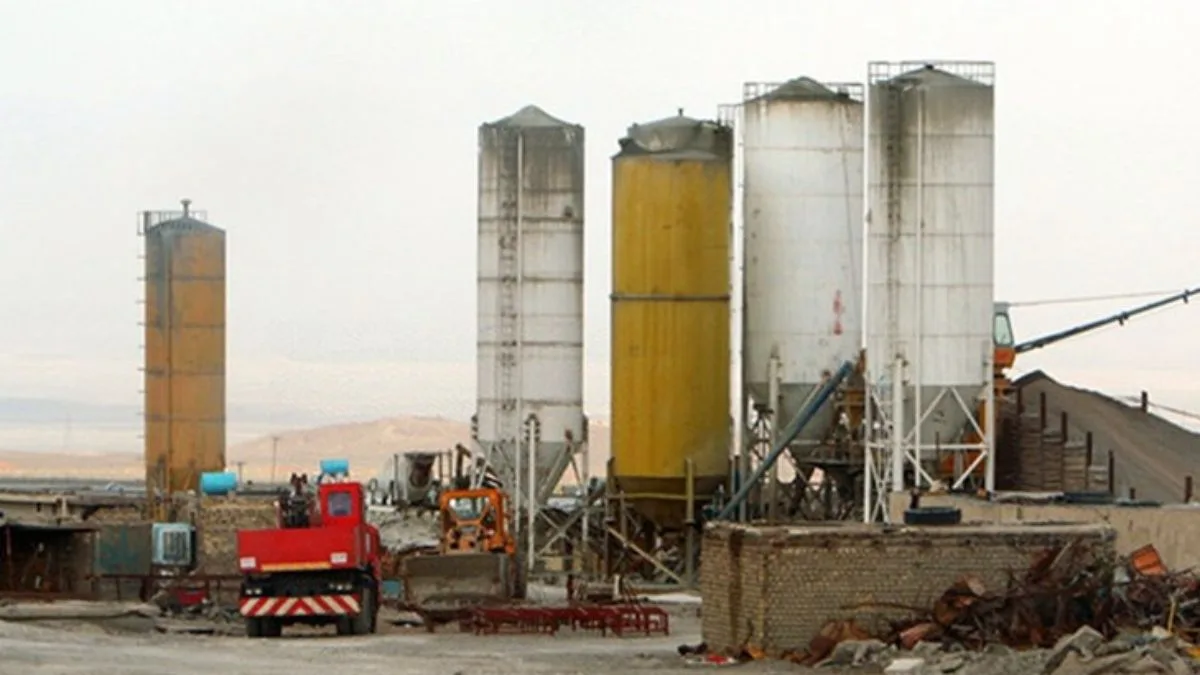
According to Iran’s semi-official Tasnim news agency, reports suggesting Tehran was willing to move highly enriched uranium out of the country were “false” and part of what it described as a broader psychological campaign aligned with Washington’s interests. The report specifically rejected claims carried by Saudi-based Al Hadath regarding the contents of a proposed memorandum of understanding (MoU) between Iran and the United States.
Tasnim said that, based on its investigations, no draft agreement currently under discussion contains any clause committing Iran to remove nuclear material from its territory.
“In the text of the MoU that exists to this day, there is no statement declaring readiness to remove nuclear materials,” the report said, adding that Iran had “essentially made no commitment regarding nuclear actions in the memorandum.”
The denial came hours after Trump claimed that Iran’s enriched uranium, which he referred to as “Nuclear Dust”, would either be handed over to the United States for destruction or dismantled under international supervision at another location.
“The Enriched Uranium (Nuclear Dust!) will either be immediately turned over to the United States to be brought home and destroyed or, preferably, in conjunction and coordination with the Islamic Republic of Iran, destroyed in place,” Trump posted on Truth Social.
The US President also said the process would take place with the involvement of atomic energy authorities and under mutually agreed supervision.
Trump’s remarks appeared to suggest that Tehran had softened its position during the ongoing negotiations. His statement also aligned with recent media reports in the United States claiming Iran had, in principle, agreed to give up its stockpile of highly enriched uranium as part of a broader settlement framework.
Iran says no nuclear concession has been agreed
Iranian officials, however, continued to publicly maintain a harder line.
Secretary of Iran’s Supreme National Security Council Mohammad Bagher Zolghadr said there would be “no retreat”, stressing that Iran needed unity to counter pressure from both the United States and Israel.
Meanwhile, Iranian Foreign Ministry spokesperson Esmaeil Baghaei confirmed that discussions were continuing over a possible 14-clause memorandum between Tehran and Washington.
“Our intention has been to firstly agree on an MoU consisting of 14 clauses,” Baghaei told state-run IRIB TV on Saturday.
He added that both sides hoped to move towards a final agreement within “30 to 60 days”.
Baghaei said key issues under discussion include the end of what Iran describes as US maritime attacks and the release of frozen Iranian assets.
At the same time, he cautioned against assuming that a breakthrough was imminent, pointing to what Tehran sees as shifting positions from Washington during the negotiations.
“It is correct that we have reached conclusions on a large portion of the discussion topics, but to say that this means the signing of an imminent agreement is something no one can claim,” he said.
Qatar and Pakistan emerge as key mediators
Diplomatic engagement between the two sides has intensified since Iran, the United States and Israel agreed to a ceasefire on April 8 after 40 days of fighting.
Iranian and US delegations later met in Islamabad on April 11 and 12, though the talks ended without a formal agreement. Since then, multiple draft proposals have reportedly been exchanged through Pakistani mediation channels.
Separately, according to CNN, American officials viewed the arrival of senior Iranian negotiators in Qatar on Monday as a positive sign, with Doha continuing to play an active mediating role.
Trump, however, maintained that Washington would not settle for a weak compromise.
“The deal with Iran will either be a great and meaningful one, or there will be no deal,” he wrote on Truth Social.